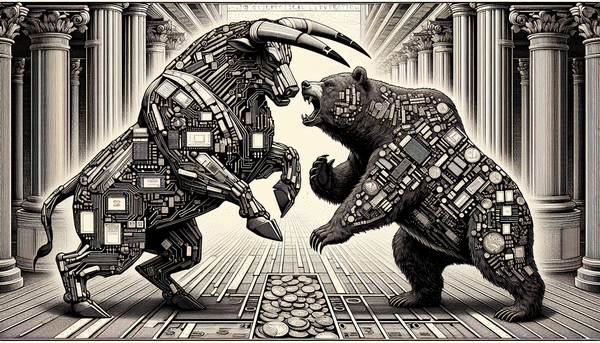
Crypto's Worst Week Since FTX Just Ended. Smart Money Is Already Buying.
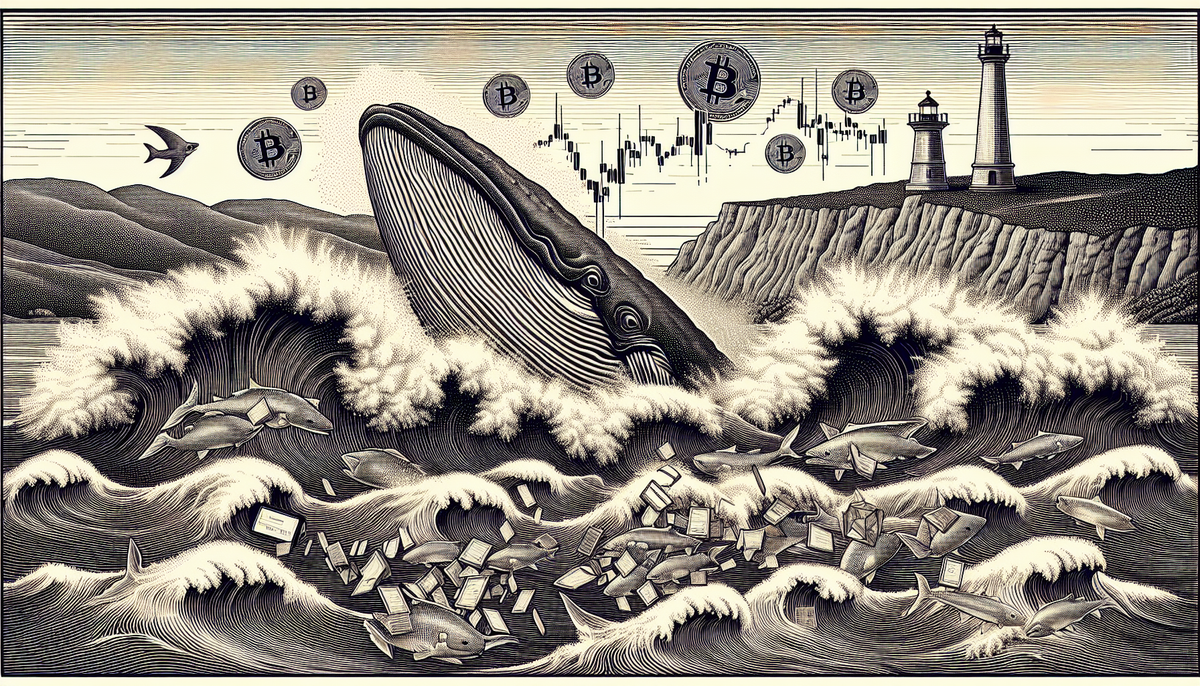
Bitcoin crashed to $60,000 this week. The total crypto market lost $2 trillion in value. A trading firm blew up $686 million on a single leveraged ETH bet. And Charles Hoskinson went on live broadcast to admit he's sitting on $3 billion in unrealized losses.
That's where we are right now.
But something interesting is happening underneath the wreckage. Every single cohort of bitcoin holders. From shrimp wallets to mega whales. They're all buying.
THE NUMBERS DON'T LIE
Let's start with how bad things got. Bitcoin dropped 16.5% in seven days, touching $60,000 on February 5th before bouncing back to around $69,000. That effectively wiped out every cent of gains since Trump's election in November 2024.
And BTC actually held up better than most. ETH fell 22.4%. BNB dropped 23.4%. Solana tanked 25.2%. The CoinDesk 20 index lost more than 17% in a single week.
Wintermute called it the worst single-day drawdown since the FTX collapse. Their desk strategist said it "felt like a 'sell at any price' working order." That's not normal market behavior. That's panic.
IBIT OPTIONS WENT NUCLEAR
Here's where it gets wild. BlackRock's spot bitcoin ETF saw options trading explode to a record 2.33 million contracts on Thursday. Puts slightly outpaced calls, meaning traders were scrambling for downside protection.
The real number that stood out? $900 million in premiums paid by IBIT options buyers in a single day. That's the highest ever. To put that in perspective, $900 million is bigger than the entire market cap of dozens of tokens in the top 100.
One viral theory on X claims this was a hedge fund blowup. The argument goes like this: a large fund bought cheap out-of-the-money calls on IBIT using borrowed money after October's crash, expecting a quick bounce. When the bounce never came and prices kept falling, brokers hit them with margin calls. The fund couldn't cover and dumped massive amounts of IBIT shares, contributing to a record $10 billion in spot volume.
Monarq Asset Management's head of derivatives confirmed rumors of "a short options entity that had to sell the underlying far more aggressively after 70k and then 65k broke."
Whether it was one fund or several, the damage was real.
THE $686 MILLION ETH BLOWUP
Then there's Trend Research. Run by Liquid Capital founder Jack Yi, the firm had built a $2 billion leveraged long position on ETH by borrowing stablecoins from Aave. Classic DeFi loop trade.
It went catastrophically wrong.
When ETH crashed below $2,000, their collateral shrank while debt stayed fixed. They ended up liquidating over 332,000 ETH. That's $700 million worth of ether dumped on Binance over five days. According to Arkham, the final tally was a $686 million loss. The firm now holds exactly 1.463 ETH.
Yi called it "risk control." He also said he's still bullish on ETH hitting $10,000 and BTC exceeding $200,000. I admire the conviction, honestly. But calling a $686 million loss "adjustments" is a special kind of optimism.
HOSKINSON'S $3 BILLION CONFESSION
Cardano founder Charles Hoskinson didn't hold back either. Broadcasting live from Tokyo, he told viewers he's down over $3 billion in unrealized losses. He shared the number to push back against the idea that crypto founders are insulated from the pain.
"I've lost more money than anyone listening to this," he said. "It would've been real easy to cash out, just walk away."
He didn't walk away. He says he's "here for life." That either sounds like conviction or stubbornness, depending on your perspective.
SO WHO'S BUYING?
Here's the interesting part. Glassnode data shows that accumulation is now happening across every wallet size cohort. The Accumulation Trend Score climbed to 0.68, the highest since late November when BTC formed a local bottom near $80,000.
Wallets holding 10 to 100 BTC are buying most aggressively. That's not retail panic buying. That's calculated positioning from entities with real capital.
And spot bitcoin ETF flows tell a more cautious story. About $1.25 billion in net outflows hit over three days. Jim Bianco of Bianco Research estimated the average ETF cost basis sits near $90,000, which means holders are staring at roughly $15 billion in collective unrealized losses.
The Fear and Greed Index sits at 44. That's "Fear" territory but not extreme fear. We've been lower.
MY TAKE
I think we're in the ugly middle of a cycle reset. The leverage got flushed. The tourists got scared out. And the people who've been through this before are quietly accumulating.
Does that mean the bottom is in? Nobody knows. Bitcoin's 1% market depth has fallen to about $5 million from $8 million in 2025, according to Kaiko. Thinner books mean bigger swings in both directions.
But the on-chain data is clear. People are buying. Not panicking. Not capitulating. Buying.
Sometimes the best trades feel the worst when you make them.